

Introduction
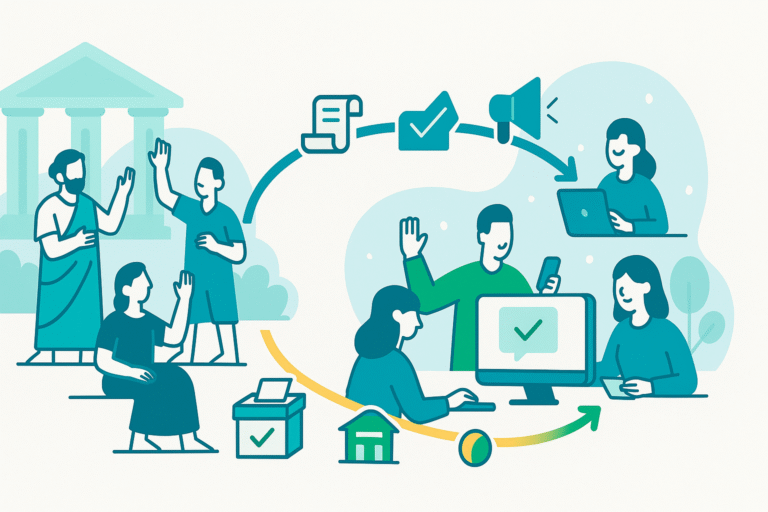
Politics is changing. In an era where public trust in institutions is declining, experiences of digital participation are showing that citizens can take an active role in shaping decisions — not just reacting to them. From online consultations to collaborative policy design, digital tools are making it possible to build a more open and participatory democracy, where listening, transparency, and shared decision-making become everyday practices.
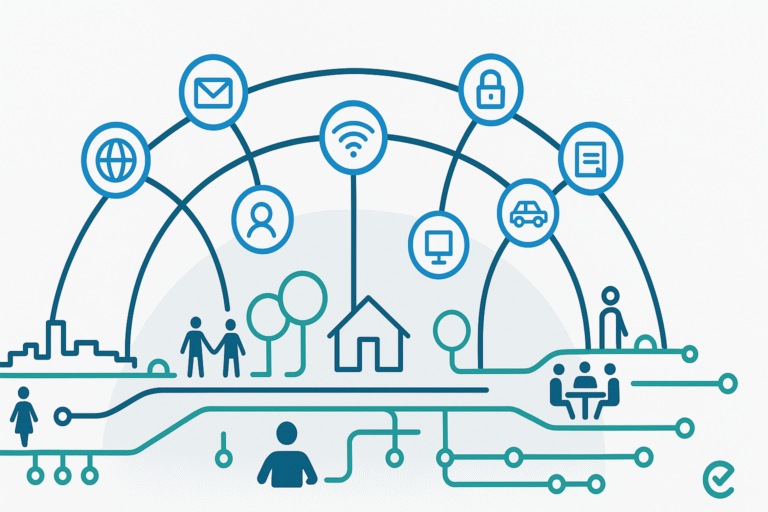
This shift from representative to participatory politics is already underway across Europe. As highlighted in the EU Digital Public Administration program, the goal is to make institutions more transparent, agile, and inclusive. In this context, platforms like Concorder are enabling citizens, communities, and organizations to make collective decisions through digital collaboration.
From representation to participation
When citizens become co-authors of policy
Digital participation does not replace politics — it enhances it. Citizens become co-authors of public policy, shaping priorities and evaluating results together with institutions. On deliberative platforms like Concorder, every participant can propose ideas, comment on drafts, contribute to revisions, and vote on alternatives.
This approach builds on the success of civic platforms such as Decidim, adopted by cities like Barcelona and Helsinki, where digital tools support participatory processes throughout the political cycle. Artificial intelligence enhances these experiences by summarizing discussions, highlighting consensus, and improving accessibility for all participants.
For a closer look at how collective decisions are built, read How a Shared Decision Is Born.
Digital participation in practice
Public consultations and participatory budgeting
Across Europe, public consultations and participatory budgeting projects are empowering citizens to shape local policies. In Italy, cities like Bologna and Milan have implemented online voting systems for community projects, improving both transparency and trust. According to Agenda Digitale, participatory technologies increase citizens’ sense of belonging and enhance the quality of decisions when processes are open and traceable.
At the European level, the European Citizens’ Initiative allows EU citizens to propose legislation and collect signatures digitally, proving that online participation can influence real policymaking.
From consultation to co-design
The next step is co-design, where institutions and citizens work together to define solutions. This model of civic collaboration merges listening, deliberation, and action. Through features like paragraph-level contributions, configurable voting groups, and AI-generated minutes, Concorder transforms political processes into structured, verifiable workflows.
The goal is not to digitize bureaucracy but to make democracy clearer, faster, and more collaborative. When administrators and citizens share the same digital space for dialogue, politics stops being a distance and becomes a relationship.
Technology as a guarantee of transparency
AI and decision traceability
Traditional political systems often struggle with accountability: who decided what, when, and why? In digital environments, every action is recorded, ensuring traceability and shared responsibility. Artificial intelligence in Concorder goes beyond automation — it helps analyze discussions, summarize key arguments, and identify common ground, providing clear insights for both policymakers and citizens. This aligns with OECD recommendations on open government and responsible participation.
Trust and inclusion
Transparency fosters trust. According to the OECD’s Trust and Open Government Report, countries that promote digital participation show higher civic engagement and reduced polarization.
This relationship between technology, trust, and civic innovation is also explored in Civic Innovation: How Technologies Rebuild Public Trust, which highlights how transparency and shared responsibility are the foundation of modern democracy.
Comparative table: from representative to collaborative politics
| Aspect | Traditional politics | Collaborative politics |
|---|---|---|
| Participation | Delegated to elected representatives | Direct, continuous participation through digital platforms |
| Transparency | Limited and often delayed documentation | Real-time tracking of discussions and voting results |
| Decision-making | Hierarchical and slow | Collaborative and based on paragraph-level contributions |
| Documentation | Manual minutes, fragmented records | AI-generated minutes, accessible digital archives |
Conclusion
Opening politics to citizens is not a threat to institutions — it’s a chance to renew democracy. Governments and organizations that embrace collaborative platforms like Concorder modernize their processes and rebuild public trust.
👉 Discover all features on Concorder.net or book a free demo.
Authoritative sources
- Agenda Digitale – How technology is changing decision-making
- OECD – Trust and Open Government Report
- Decidim – Open-source platform for participatory democracy