
Introduction
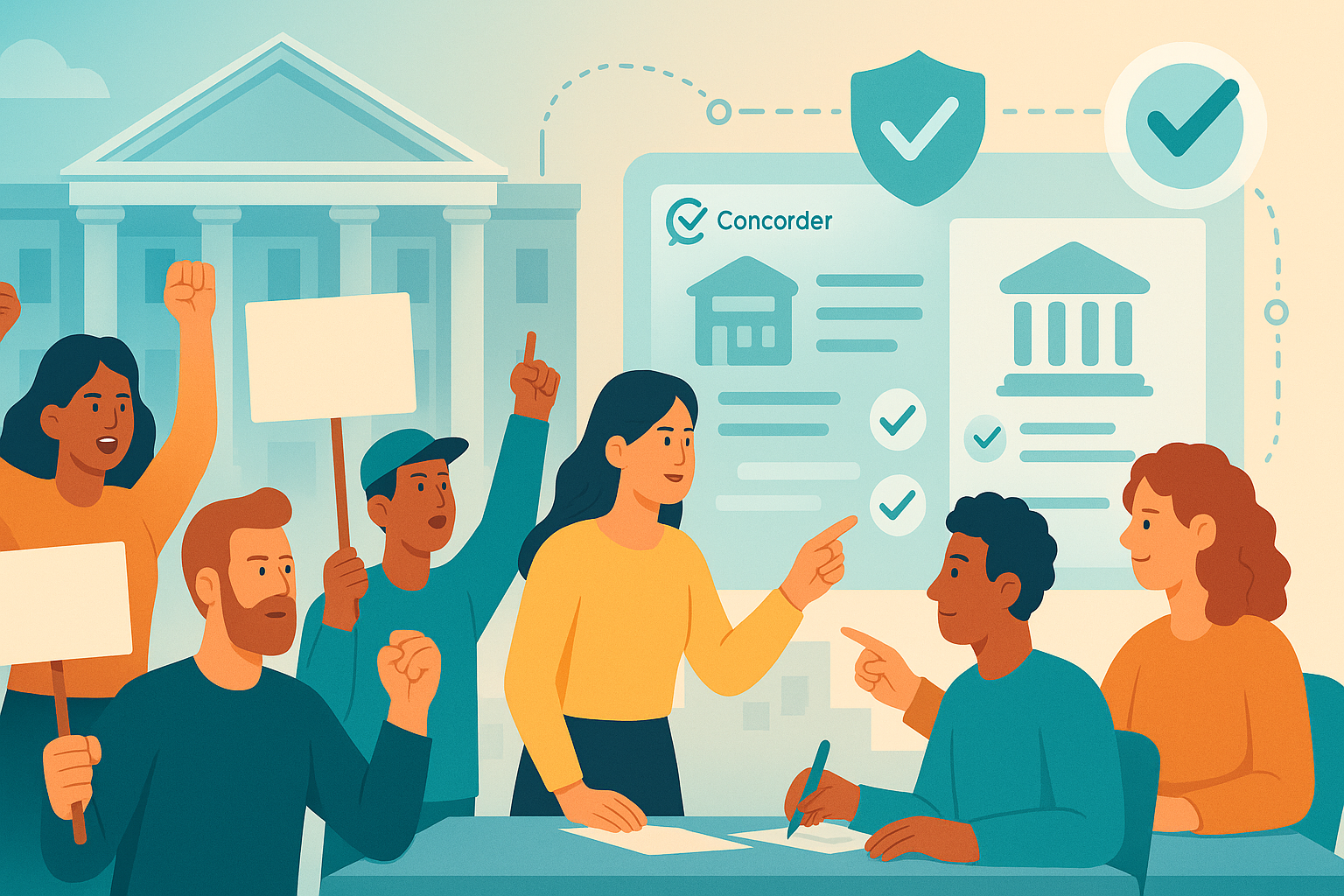
In recent years, many civic movements have evolved from simple protest to genuine co-design. This shift — from resistance to collaboration — requires new methods and digital tools capable of turning civic energy into structured, inclusive, and traceable processes. Civic collaboration emerges when citizens can stay informed, contribute constructively, deliberate together, and evaluate the long-term impact of shared decisions.
For a deeper understanding of how collective decisions take shape, see How a Shared Decision Is Born, and for a forward-looking view on future scenarios, read Digital Democracy in 2030: Scenarios and Opportunities.
From protest to participation
Defining the problem before finding solutions
The first step is to transform claims into well-defined problems: who is involved, what constraints exist, and what indicators will define success. Clarifying the criteria before choosing options reduces polarization and opens the door to co-design. The OECD’s open government approach emphasizes quality, inclusion, and impact — not just procedural compliance.
From dialogue to structured proposals
Effective collaboration turns ideas and discussions into structured proposals with clear objectives, alternatives, and measurable outcomes. Digital platforms make this possible through paragraph-level contributions, transparent discussion threads, explicit voting parameters (quorum, majorities, secret or open ballot), assemblies focused on mature points, and AI-generated minutes with actions and deadlines.
To explore how technology strengthens trust and transparency in civic processes, see Civic Innovation: How Technologies Rebuild Public Trust.
Methods and tools for civic collaboration
Proposals, contributions, and version tracking
An effective process divides each topic into sections (problem, options, risks, budget, implementation) so that every paragraph can receive targeted contributions and revisions with full history. This granular method reduces conflicts and preserves institutional memory.
AI as a civic assistant
Artificial intelligence helps summarize discussions, highlight recurring themes, and generate automatic minutes at the end of assemblies. In Concorder, AI is embedded across the entire process: drafting and structuring proposals, integrating contributions, moderating comments, and finalizing minutes with attendance, results, and follow-up actions. The aim is not to replace human debate, but to make it more transparent, inclusive, and efficient.
From CrowdLaw to co-design
Experiments in CrowdLaw — as promoted by The GovLab — show that citizen input improves the quality and legitimacy of regulations when processes are well-designed: clear goals, defined stages, and integration between public contributions and institutional expertise. Whether applied to local plans, cultural programs, or civic regulations, this approach turns protest into concrete, measurable collaboration.
Comparative table: from “no” to “how”
| Stage | Reactive approach | Civic collaboration |
|---|---|---|
| Problem definition | Generic slogans and demands | Explicit needs, success criteria, and shared metrics |
| Idea generation | Scattered comments and untracked inputs | Structured proposals with paragraph-level contributions and revision history |
| Decision-making | Informal votes and questionable outcomes | Explicit voting parameters (quorum, majority) and transparent results |
| Implementation & memory | Late or incomplete records | AI-generated minutes with responsibilities, deadlines, and archiving |
Conclusion
Civic collaboration doesn’t happen by chance — it’s the result of clear processes, defined roles, appropriate tools, and responsible use of AI. When each stage — from needs to results — is visible and verifiable, communities shift from “no” to “how”: fewer conflicts, stronger trust, and measurable impact.
👉 Discover all features on Concorder.net or book a free demo.