
Introduction
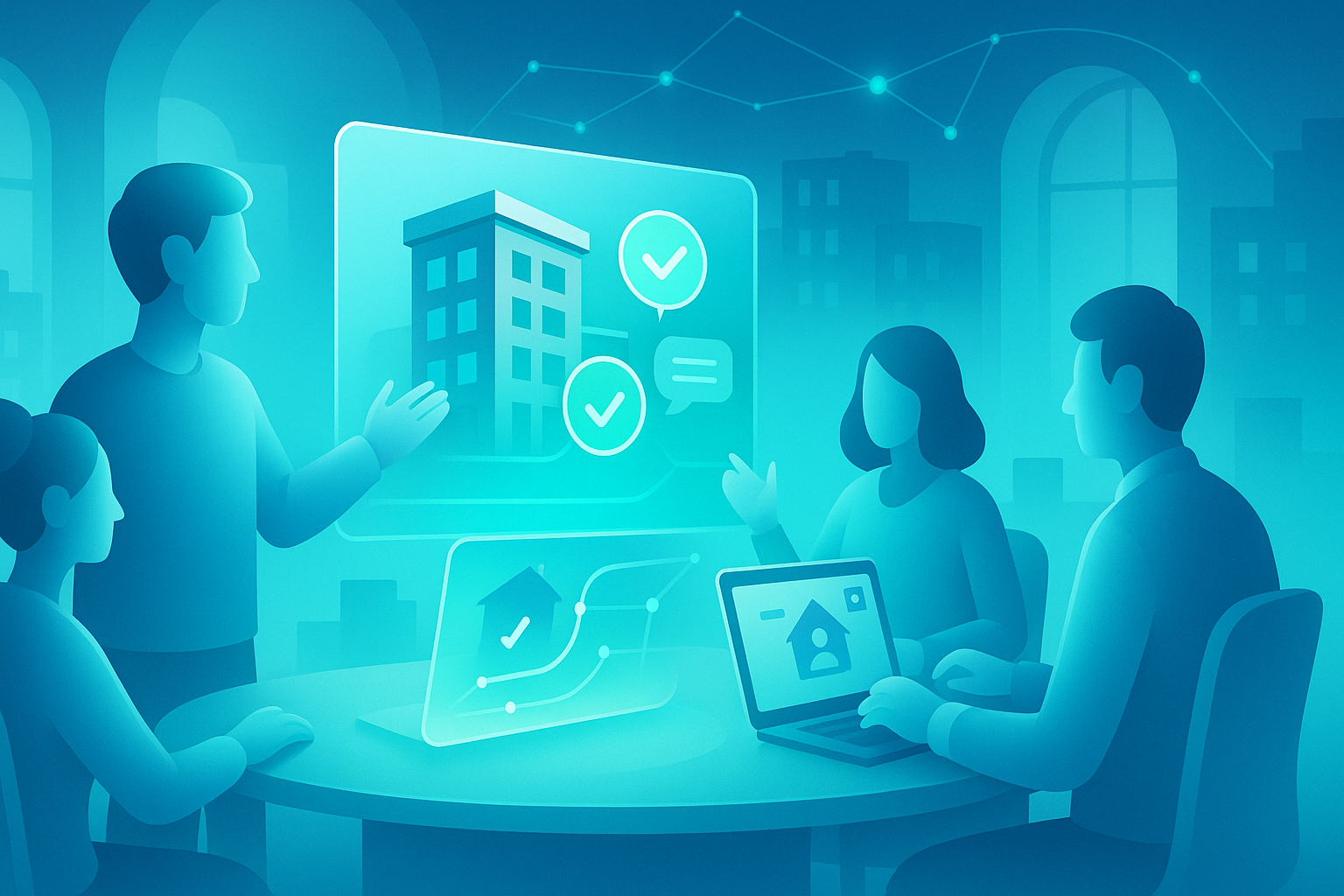
In 2025, condominium governance is evolving toward a more transparent, collaborative and distributed model. Thanks to platforms such as Concorder, assemblies are no longer compressed into a single evening. Instead, proposals can be discussed over days or weeks, allowing residents to contribute calmly and constructively.
This approach reflects principles from the OECD Digital Government framework, which encourages collaborative, traceable and evidence-based decision-making.
Why this new model matters
- continuous participation throughout the process;
- collaborative editing with paragraph-level contributions;
- transparent workflows with full traceability;
- conflict reduction due to calmer discussions;
- short, efficient final assemblies.
“Distributed participation improves trust and decision quality.” — OECD Digital Government
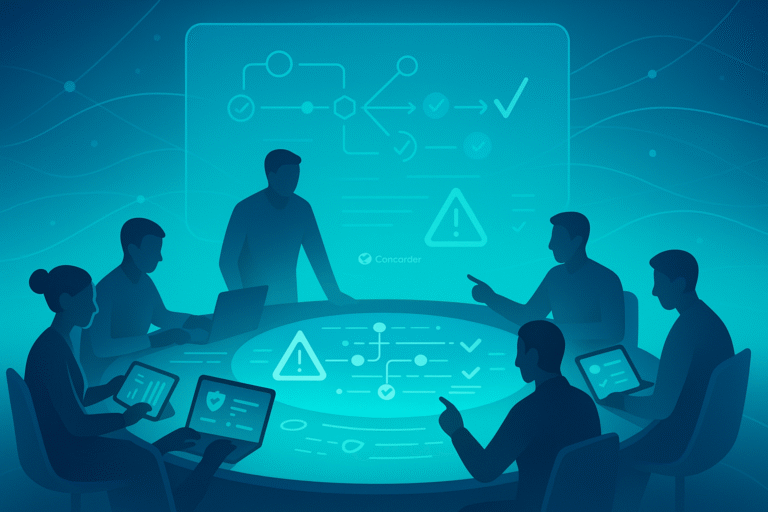
The new digital workflow
Step 1 — Proposal creation
Both managers and residents can draft proposals. AI helps generate structured texts and improves clarity.
Step 2 — Collaborative contributions
Each paragraph can receive comments, edits, clarifications and suggestions, creating a shared understanding among residents.
Step 3 — Alternatives and priorities
Proposals can include multiple options. Residents can compare solutions, vote on alternatives and assign priorities.
Step 4 — Pre-voting
Before the assembly, residents vote online on their preferred options. Only mature and supported proposals move forward.
Step 5 — Final assembly
The assembly becomes a short validation step. Most decisions have already been made through the collaborative process.
Hybrid assemblies
Hybrid refers to both the process (online + in-person finalisation) and the event itself, with residents participating either online or alongside the property manager.
The role of AI
- drafting proposals,
- neutral rewriting,
- summarising discussions,
- automatic minutes,
- majority checks.
How Concorder enables this model
- structured proposals and paragraph contributions,
- clear deliberation workflows,
- transparent voting with automated majorities,
- AI-generated summaries and minutes,
- an auditable decision archive.
Conclusions
The 2025 model transforms assemblies into efficient, inclusive and conflict-free processes. It empowers communities and simplifies the administrator’s role.