

Introduction
E-governance (digital governance) is more than putting existing procedures online. It is a strategic way to open up information, structure dialogue, and make collective decisions traceable and accountable. When designed well, e-governance improves participatory processes by lowering access barriers, organizing debate, and turning outcomes into actionable, verifiable decisions. This article explains how, drawing on good practice and pointing to concrete tools that institutions, communities, and organizations can put to work right away.
What do we mean by e-governance?
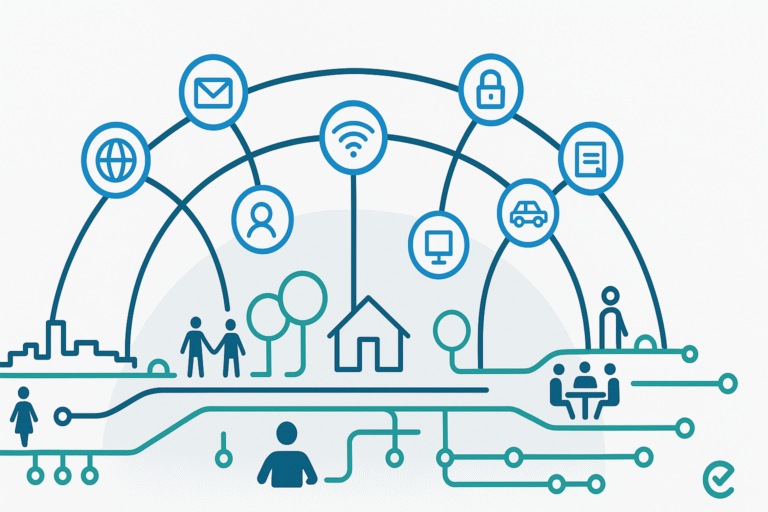
E-governance is the intentional use of digital technologies to enhance communication, collaboration, and participation between institutions and people. It goes beyond digitizing paperwork: it includes open information portals, structured consultations, online deliberation, secure voting, and transparent follow-up on the actions decided together.
As discussed in Civic innovation: how technology strengthens public trust, technology becomes a bridge—rather than a filter—when it helps citizens understand issues, express informed preferences, and verify how inputs shaped the final decision.
Why e-governance matters for participation
Effective participation stands on three pillars: information, dialogue, and decision. E-governance adds clarity and rigor to each.
1) Open, timely information
People can only contribute meaningfully when they have access to data, proposals, budgets, drafts, and timelines. Digital portals allow 24/7 publication of up-to-date materials and make version history auditable—key conditions for informed engagement.
2) Structured dialogue
Moving from one-way communication to two-way collaboration requires tools that capture arguments, evidence, and counter-proposals without turning debates into noise. As outlined in Shared decisions: theory and practice of deliberation, well-designed platforms guide participants through reading, commenting by section, and co-editing text to surface common ground.
3) Traceable decisions
Every decision should leave a transparent trail: who participated, how they voted, which arguments were considered, what actions were approved, and who is accountable. When participation ends with verifiable decisions and public follow-up, legitimacy grows and disputes shrink.
How e-governance improves participatory processes
- Lower entry barriers — Participation no longer depends on being physically present; remote access invites broader, more diverse voices.
- Focused debates — Proposals and comments can be grouped by topic, priority, and urgency, making moderation simpler and outcomes clearer.
- Informed choices — Participants can consult data, legal references, cost estimates, and impact notes during the whole process.
- Faster, leaner operations — Automating invitations, attendance, voting, and minute-taking (see From meetings to automatic minutes: how AI simplifies assemblies) frees staff time and reduces errors.
Traditional vs. digital governance in participation
| Aspetto | Governance tradizionale | E-governance partecipativa |
|---|---|---|
| Accesso alle informazioni | Limitato a orari d’ufficio o documenti cartacei | Accesso online 24/7 a dati e documenti pubblici |
| Modalità di partecipazione | Incontri fisici, spesso poco inclusivi | Consultazioni e assemblee digitali aperte e tracciabili |
| Trasparenza delle decisioni | Scarsa tracciabilità dei processi decisionali | Decisioni pubblicate e verificabili in tempo reale |
| Efficienza | Processi lenti e frammentati | Automazione e integrazione tra strumenti |
| Coinvolgimento dei cittadini | Limitato a una minoranza attiva | Ampio coinvolgimento grazie a strumenti accessibili |
E-governance in practice: platforms that structure participation
Institutions and civic organizations increasingly use collaborative platforms to manage the full participation cycle—from proposals to decisions. Solutions like Concorder support:
- Shared proposals with attachments and paragraph-level discussion;
- Evidence-based drafting (data, links, cost and impact notes embedded in context);
- Structured voting (including weighted voting where applicable, e.g., in condominium meetings);
- AI-generated minutes summarizing participants, agenda, votes, observations, and approved actions.
For smaller communities and housing contexts, the case study The “Green Condominium” case shows how a transparent digital process reduced conflicts and accelerated decisions—an approach that also scales to NGOs, cooperatives, and public agencies.
Design challenges to get right
Benefits are real, but success depends on thoughtful design and capacity building. Key challenges include:
- Digital inclusion — Provide assisted access, mobile-first interfaces, and plain-language summaries so that no one is left behind.
- Privacy and security — Apply data-minimization, clear consent flows, and strong authentication for voting and identity verification.
- Continuous training — Offer simple guides and ongoing support for staff, facilitators, and citizens to use the tools effectively.
As argued in Digital participation: how to truly engage citizens, the cultural shift matters as much as the technology: e-governance must cultivate trust, clarity, and shared responsibility.
From participation to decisions: closing the loop
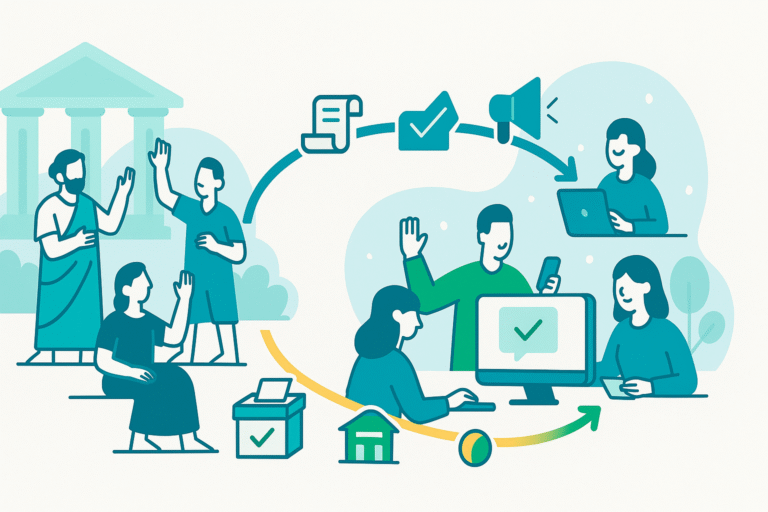
Participation has impact when it ends in a clear, enforceable decision. Here, documentation and automation are crucial. AI can draft minutes that include attendance, agenda items, option pros/cons, vote results, and agreed actions with owners and deadlines. When this information is published promptly, the public can see not only what was decided, but also why—and track implementation over time.
This “closed loop”—from open information, to structured dialogue, to traceable decisions—builds credibility and reduces the friction that often undermines participatory initiatives.
Conclusion
E-governance is not a technical add-on; it is a new operating model for institutions and communities. By opening information, structuring dialogue, and making decisions auditable, it turns participation into better policy and smoother implementation. Whether you are a city office, a public agency, or a civic organization, the path is clear: design for inclusion, document decisions, and automate the repetitive steps so that people can focus on substance.
👉 Want to improve your participatory processes?
Book a free demo of Concorder or explore the platform now at www.concorder.net.