

Introduction
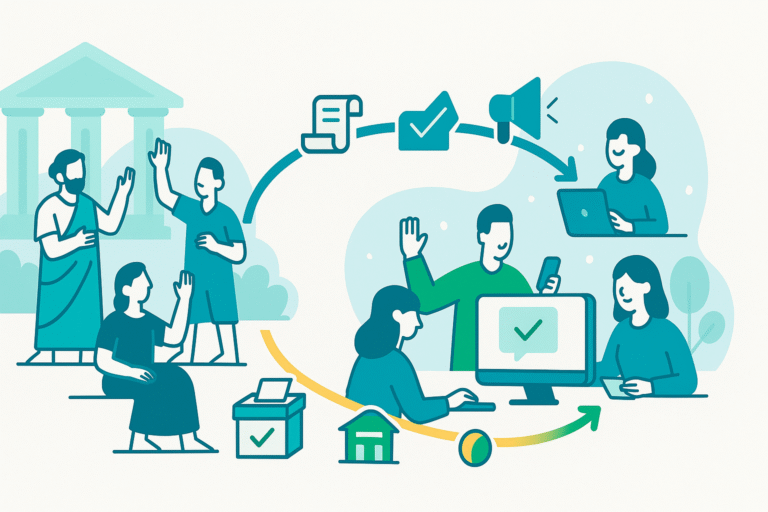
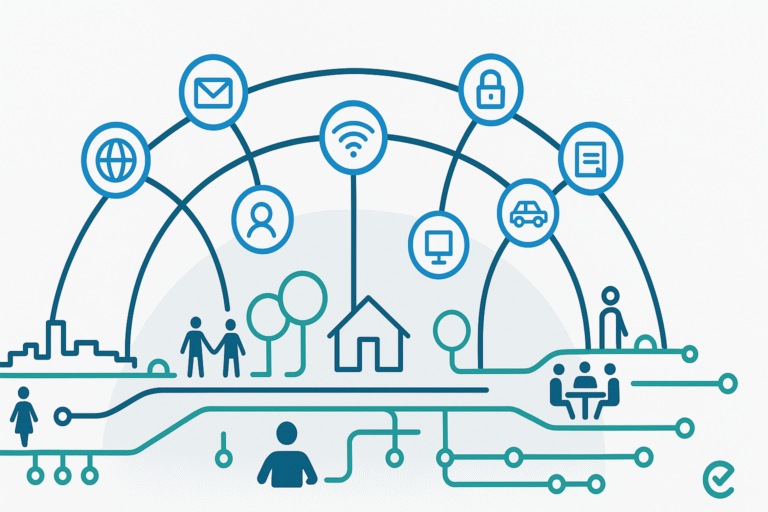
Digital inclusion is no longer just a technical issue — it’s a democratic one. In a world where collective decisions increasingly happen online, ensuring that everyone can access and understand participatory processes means defending the very essence of citizenship. Digital inclusion is not only about connectivity; it’s about the ability to understand, contribute, and deliberate in an informed and equitable way.
As explored in Digital Democracy in 2030: Scenarios and Opportunities, the future of public participation depends on how institutions and platforms make their processes accessible, understandable, and inclusive — especially for those who are currently left out.
Accessibility and participation: two sides of the same coin
The technological dimension of inclusion
The first level of digital inclusion is technological access: connectivity, devices, and basic digital skills. But according to the European Commission’s Digital Strategy, infrastructure alone is not enough. We must design platforms and interfaces that are intuitive, inclusive, and easy to use, even for people with little technical experience.
An inclusive deliberative process should not exclude those with visual, motor, or linguistic difficulties. Accessible design (UX for all, strong contrast, screen-reader compatibility, multilingual support) is therefore a cornerstone of any modern participatory platform.
The cognitive dimension: participation means understanding
Being “online” is not the same as being included. If language is too technical or rules are obscure, participation becomes symbolic. A truly inclusive process translates complex information into plain language and visualizes options clearly. In this sense, platforms like Concorder make participation easier through integrated AI that summarizes texts, explains deliberative steps, and provides multilingual assistance automatically.
Concorder also includes a guest-access mode that allows people to participate in public proposals without registration, lowering barriers and fostering civic inclusion.
How inclusion works in collaborative platforms
Tools for barrier-free participation
Concorder was designed around an inclusive philosophy: anyone can read, contribute, and vote on public proposals, even without an account. Each proposal is divided into thematic paragraphs, allowing participants to comment on specific sections rather than entire documents. This structure reduces cognitive load and ensures that every contribution finds its space.
As discussed in How E-governance Improves Participatory Processes, transparency and traceability are essential for inclusion. Knowing who contributed what, and how each idea evolved, guarantees equal recognition for all participants.
AI moderation and plain language
Artificial intelligence plays a key role by identifying recurring themes, moderating discussions fairly, and producing automatic summaries written in clear, accessible language. This is especially useful in intergenerational or multicultural groups where participants may have different literacy or fluency levels.
Built-in translation features also allow participants to interact across languages, turning digital participation into a truly global experience. AI doesn’t replace human voices — it amplifies them, ensuring that every voice can be heard and understood.
Social network and collaboration features
Concorder also functions as a deliberative social network, where users have public profiles, list their interests and values, and connect with groups working on similar topics. This social dimension transforms digital inclusion into social inclusion, creating bridges between people, ideas, and communities.
Best practices and international standards
Global and European frameworks
According to the OECD, inclusive participation is one of the three pillars of open government, alongside transparency and accountability. The European Union and the United Nations include digital inclusion indicators in their Sustainable Development Goals (SDG 16) and e-government indexes.
These indicators measure not only technological access but also people’s ability to influence decision-making processes. Inclusion is not an end in itself — it’s the foundation of trust and legitimacy in institutions and communities.
Building local capacity and shared responsibility
Across Europe, civic-tech projects are expanding thanks to EU funding programs and national open-government initiatives. Yet the challenge remains ensuring universal accessibility: not only enabling citizens to use digital tools but empowering them to shape collective decisions. As highlighted in Civic Innovation: How Technologies Rebuild Public Trust, inclusion means more than participation — it means ownership of the process itself.
Comparative table: from access to participation
| Dimension | Digital access | Participatory inclusion |
|---|---|---|
| Technology | Connectivity and devices | Accessible platforms, inclusive UX, and open-source architecture |
| Comprehension | Fragmented or technical information | AI summaries and plain-language explanations |
| Participation | Passive users or spectators | Active contributions per paragraph and transparent voting |
| Community | Temporary or isolated groups | Collaborative networks with shared memory and continuity |
Conclusion
Digital inclusion is the foundation of a fully participatory democracy. Guaranteeing accessibility, simplicity, and transparent processes means giving a voice to those who have long been excluded. Artificial intelligence, when used ethically and responsibly, can become a powerful ally in making participatory processes truly universal.
👉 Discover all features on Concorder.net or book a free demo.
Authoritative sources
- European Commission – Inclusive Digital Society and Accessibility Initiatives
- OECD – Open Government and Citizen Participation