
Introduction
Condominium life can easily slide from minor disagreements into persistent conflicts: service charges, noise, maintenance timelines, or how to allocate costs. Yet behind every disagreement lies the opportunity to build a collaborative community. Today, digital governance and clear participation methods help residents move from confrontation to shared solutions, with decisions that are transparent, traceable, and easier to implement.
In this perspective, moving from a vertical power structure to co-design means turning grievances into proposals and proposals into decisions. For a broader view on how civic collaboration starts, see From Protest to Co-Design: How Civic Collaboration Begins.
Conflicts and opportunities in condominium governance
From chaotic meetings to structured collaboration
General meetings often concentrate tensions: fragmented information, unclear rules, incomplete minutes. However, the same meetings can become spaces for constructive collaboration if the agenda is clear, the process is visible, and outcomes are documented. A governance model that prioritizes preparation, clarity, and traceability reduces disputes and speeds up implementation.
From problem to proposal
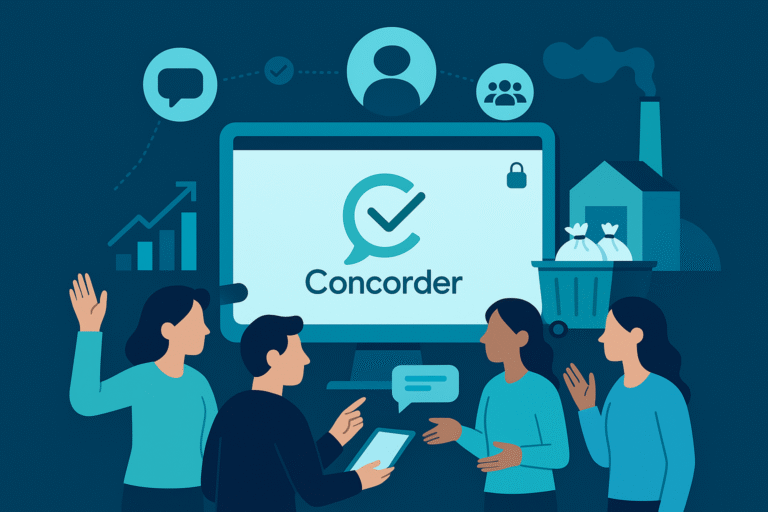
The first step is to turn complaints into structured proposals. Residents define the problem, list alternatives, and weigh costs/benefits and impacts. On a platform like Condo Concorder, each idea becomes a proposal with paragraph-level contributions, document attachments, and configurable voting groups (quorum, majority, secret/open ballot). Mature items move to the assembly, where results are automatically computed and archived.
For a practical look at decision flows supported by technology and transparency, see Civic Innovation: How Technologies Rebuild Public Trust.
Digital tools that transform meetings into decisions
Attendance, proxies, and weighted votes
With Condo Concorder, convocations include a clear agenda; attendance and proxies are recorded digitally; and voting can be weighted by thousandths to reflect ownership shares. Quorum and majorities are calculated in real time with immediate, auditable results.
AI-generated minutes and shared memory
One of the most contentious steps is drafting the minutes. Concorder’s AI-generated minutes compile agenda items, voting outcomes, attendance, and follow-up actions, creating a searchable, shared memory for the building. This reduces misunderstandings and ensures continuity when boards or building managers change. For method and structure of deliberation, see also How a Shared Decision Is Born.
Standards and best practices to reduce disputes
Clear rules and consistent documentation are essential in managing shared expenses and works. International guidance—such as the RICS Service Charge Residential Management Code—emphasizes transparent budgeting, timely reports, and accessible records for residents. Likewise, UN-ECE Guidelines on Condominium Management and Ownership highlight the importance of clear legal frameworks, resident participation, and capacity-building for effective condominium governance.
Workflow: from issue to implementation
1) Prepare the framework
Publish a project page with objectives, criteria for evaluation, timeline, and indicative budget. Define voting parameters and when items are considered “mature” for the assembly. This sets expectations and dramatically reduces friction.
2) Co-write and compare options
Invite residents to contribute on specific sections (problem, options, costs/benefits, risks, logistics). When alternatives arise, open a dedicated voting group with clear parameters and a deadline. The aim is a shared, well-documented choice rather than endless threads without closure.
3) Deliberate and document
Hold the assembly (on-site or online) focusing only on mature items. Attendance and proxies are registered digitally; votes are collected and computed; the platform produces AI minutes including outcomes, responsibilities, and due dates. Everything is archived in the building’s group space, strengthening accountability and institutional memory.
Responsive comparison table: from conflict to collaboration
| Aspect | Traditional management | Collaborative governance |
|---|---|---|
| Convocations | Emails, flyers, private chats | Digital notices with agenda and traceability |
| Attendance & proxies | Paper logs or unverified | Digital registration and automatic thousandths |
| Decision-making | Manual counts, contested outcomes | Electronic voting with quorum and instant results |
| Minutes & archiving | Late or incomplete minutes | AI-generated minutes, digitally archived and searchable |
Conclusion
The future of condominium governance is not more bureaucracy—it is better collaboration. When every resident has voice, vote, and visibility, conflict gives way to trust. Digital platforms like Concorder provide a simple, secure way to deliberate together, produce reliable minutes, and build a shared memory of the building.
👉 Discover all features on Concorder.net or book a free demo.