
Introduction
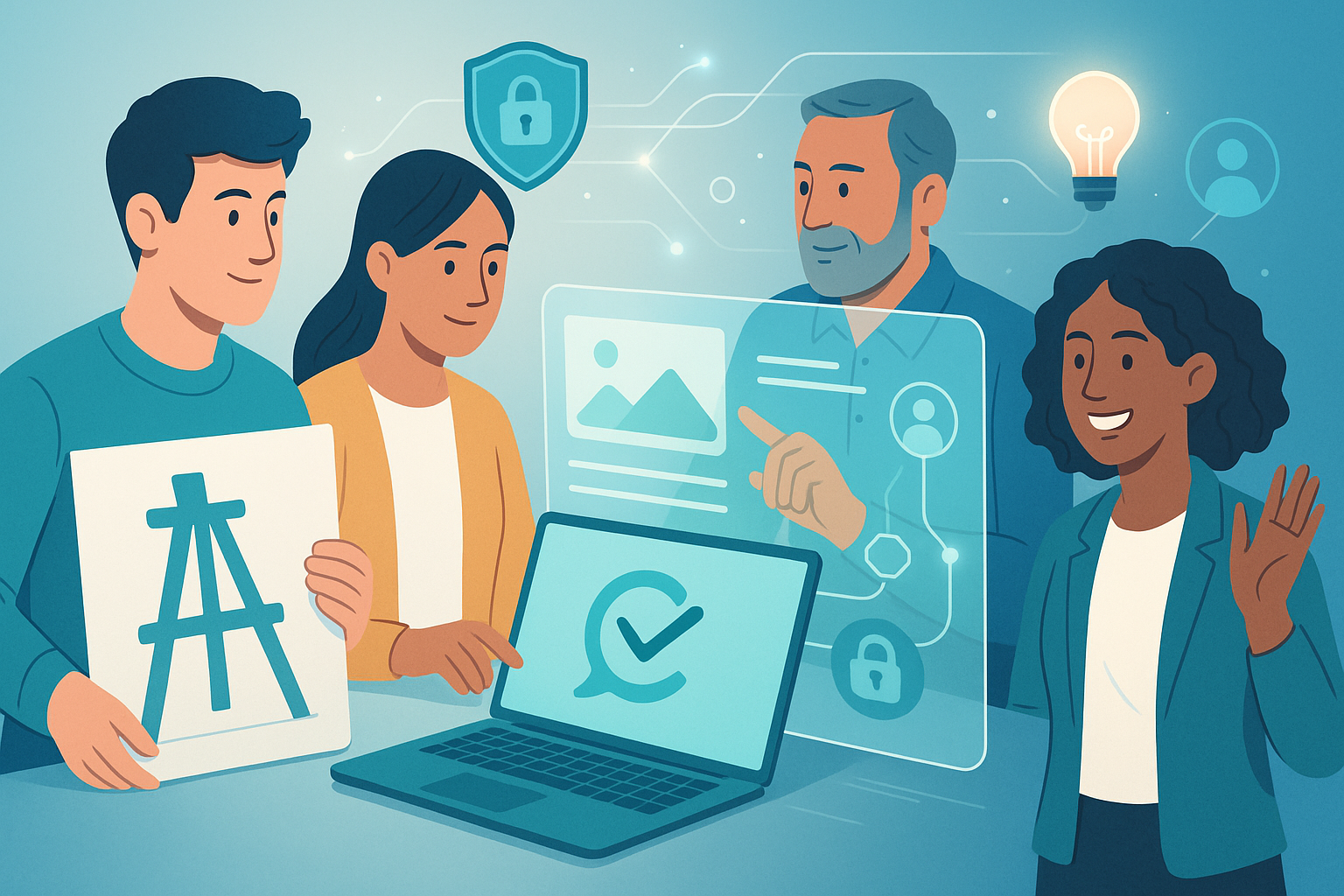
Cultural associations thrive on the passion and creativity of their members, yet transforming ideas into real projects is often a challenge. The key lies in co-creation: a participatory method where members, volunteers, and staff collaborate to define goals, activities, and outcomes. Today, digital platforms and artificial intelligence make this collaboration more structured, transparent, and inclusive than ever.
To understand how digital participation is transforming collective decision-making, see also Digital participation: how to truly engage citizens.
Why co-create with members
From consultation to shared design
Listening to members is essential, but true participation goes further. In co-creation, participants are not just consulted — they help define goals, actions, and success indicators together. This approach increases project quality, reduces conflicts, and strengthens the association’s identity through shared responsibility.
A transparent and inclusive method
Transparency is the foundation of trust: everyone should be able to see who proposed what, which options were considered, and how decisions were made. This is the same principle that drives e-governance in public administration — making rules and decisions visible from the start ensures fairness and accountability.
How to structure co-creation
Collaborative digital spaces
Digital collaboration tools allow cultural organizations to create shared workspaces for each project, assigning clear roles such as coordinator, curator, communication lead, or logistics manager. Members can propose ideas, upload documents, comment, and vote directly online.
Within Concorder, each project can be structured into proposals, paragraph-level contributions, and voting groups with configurable parameters (quorum, majority, secret or open ballot). The platform also provides AI-generated minutes that automatically document outcomes and responsibilities, keeping every step transparent and traceable.
AI as a creative ally
Artificial intelligence helps simplify organizational work by summarizing discussions, identifying recurring themes, and generating meeting summaries. In Concorder, AI is embedded across the process — assisting in writing proposals, moderating comments, generating summaries, and producing minutes — saving time and ensuring clarity.
Structured input and version tracking
Dividing the project into thematic sections allows for organized collaboration. Each section can receive contributions that are tracked, accepted, or revised, preserving a transparent history of changes. This ensures that every voice contributes to the final version — the true essence of collective authorship.
How it works in 3 steps
1) Define the framework
Start with a project page outlining objectives, evaluation criteria, timelines, and a preliminary budget. Define the voting parameters and publishing methods early on, so every participant understands the process from the beginning.
2) Open collaboration
Invite members to contribute: write sections, suggest activities, comment on others’ ideas. The goal is not a perfect document but a shared vision. When alternative options emerge, organize a quick, transparent vote. This method is described in How a shared decision is born.
3) Assembly and AI-generated minutes
Once proposals have matured, hold an online or in-person assembly to deliberate. Attendance is digitally recorded, votes are counted automatically, and AI generates the final minutes including results, responsibilities, and next steps. Everything remains archived and verifiable.
Co-creation and the Third Sector
The Italian framework
In Italy, co-creation in the non-profit sector is formally defined by the Guidelines for co-programming and co-designing (Ministerial Decree 72/2021) from the Ministry of Labour and Social Policies. They provide a framework for collaborative partnerships between public institutions and cultural associations. You can consult the full document on the Ministry’s official website.
International best practices
Globally, the OECD promotes the principle of open government: involving citizens at all stages of decision-making while ensuring inclusiveness and measurable impact. Cultural associations can apply the same principles, becoming laboratories of civic innovation and collective intelligence.
Comparative table: from “running events” to “building communities”
| Aspect | Traditional management | Digital co-creation |
|---|---|---|
| Ideation | Few people decide the agenda | Open ideas with structured inputs and paragraph-level contributions |
| Decision-making | Informal or undocumented meetings | Transparent voting with clear parameters and traceable results |
| Communication | Periodic reports and private emails | Shared digital spaces with live updates and group visibility |
| Memory | Manual or incomplete minutes | AI-generated minutes archived automatically and accessible anytime |
Conclusion
Co-creation represents a cultural shift — moving power from organizations to their members and turning participation into a shared creative process. With digital collaboration tools and AI assistance, every association can enhance its members’ skills and build more transparent, inclusive, and sustainable projects.
👉 Discover all features on Concorder.net or book a free demo.
Authoritative sources
- Italian Ministry of Labour and Social Policies – Guidelines for co-programming and co-design (Ministerial Decree 72/2021)
- OECD – Open Government and Citizen Participation