

Introduction
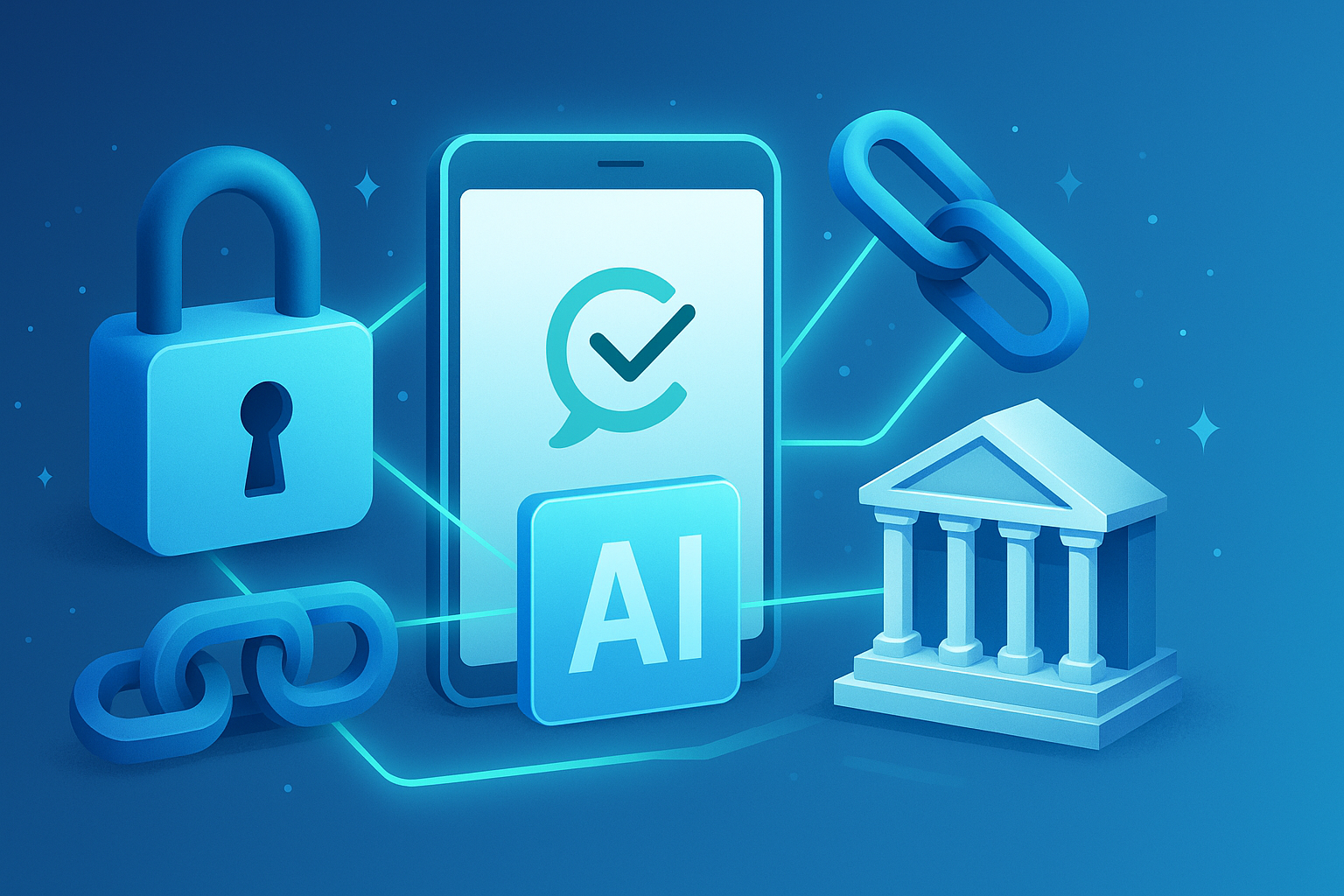
Digital democracy is entering a new phase, driven by artificial intelligence, blockchain, and the growing demand for transparency. These technologies are not replacing politics — they are transforming it, making participation more informed, verifiable, and inclusive.
This evolution continues a long journey from the agoras of ancient Greece to today’s online forums, where citizens deliberate and decide collectively, as explored in The history of digital democracy: from Greek agoras to online forums.
AI and informed participation
Artificial intelligence as a civic assistant
Artificial intelligence is becoming a cornerstone of civic participation. It can analyze vast discussions, highlight emerging themes, and synthesize citizen input into coherent summaries. The goal is not to replace human dialogue but to make it more accessible, inclusive, and data-informed.
As reported by Wired Italia, AI “can help citizens understand collective priorities, provided that its use remains transparent and accountable.” When designed with ethics and openness in mind, AI becomes a civic ally — a tool for understanding, not control.
How Concorder applies AI across the deliberative process
Within this landscape, Concorder exemplifies how AI can enhance digital deliberation. The platform integrates artificial intelligence across every phase of collective decision-making:
- Assisting users in writing and structuring proposals
- Generating and integrating paragraph-level contributions
- Moderating discussions intelligently
- Summarizing debates and producing AI-generated minutes after assemblies
This transversal use of AI helps transform group discussions into structured and traceable decisions, fostering a transparent and evidence-based culture of collaboration. For further reading, see Civic innovation: how technology rebuilds public trust.
Blockchain and the transparency revolution
Distributed trust for democratic systems
Blockchain is being explored as a technology for auditability and traceability in democratic processes. By creating distributed records of actions, proposals, or votes, it can ensure that no one manipulates results after the fact.
The OECD identifies transparency as a cornerstone of legitimacy and public trust. Properly implemented, blockchain can complement digital governance by strengthening verification mechanisms and reducing conflicts in online decision-making.
Technology alone is not enough
However, technology must serve people, not the other way around. True transparency comes from designing understandable and participatory processes. Platforms like Concorder show that traceability and collaboration can coexist without sacrificing privacy or accessibility — values that remain central to any inclusive democracy.
For an institutional perspective on how digital governance supports open participation, see How e-governance improves participatory processes.
Comparative table: from traditional to digital participation
| Dimension | Traditional democracy | Digital democracy |
|---|---|---|
| Access | Limited to physical meetings or representatives | Open to citizens and groups online |
| Information | Static documents, often complex | Open data, AI summaries, and visual clarity |
| Transparency | Ex post control of decisions | Real-time traceability and auditability |
| Participation | Intermittent and limited | Continuous, collaborative, and well-documented |
Conclusion
The future of digital democracy will depend less on technology itself and more on how we design it to empower participation and accountability. Artificial intelligence can amplify collaboration; blockchain can verify integrity; transparency ensures that every decision is rooted in trust.
Concorder embodies this vision: AI-powered collaboration that helps citizens, teams, and institutions make decisions together — clearly, collectively, and consciously.
Call to Action
🇬🇧 Book a free demo of Concorder → https://blog.concorder.net/en/about/#booking
Authoritative sources
- OECD – Open Government and Citizen Participation: https://www.oecd.org/en/topics/open-government-and-citizen-participation.html
- Wired Italia – “AI and politics: benefits and risks for citizens”: https://www.wired.it/branded/article/italiani-ai-benefici-rischi-politica/


