
Introduction
Digital participation has moved from being an experiment to becoming a strategic pillar for governments, cities, NGOs, and communities. Yet “asking for feedback online” is not the same as meaningful engagement. Real participation requires clear rules, transparent tools, and a pathway that leads from information to dialogue, from proposals to decisions, and finally to measurable impact. Platforms like Concorder help make this pathway concrete, inclusive, and auditable—without replacing human judgment, but augmenting it.
From consultation to collaboration
Many initiatives stop at the consultation stage: a survey here, a comment form there. Valuable—but often insufficient to change outcomes. Effective participation shifts the focus from “collecting opinions” to co-creating solutions. That means structured debates, transparent trade-offs, and clear criteria for how inputs turn into decisions.
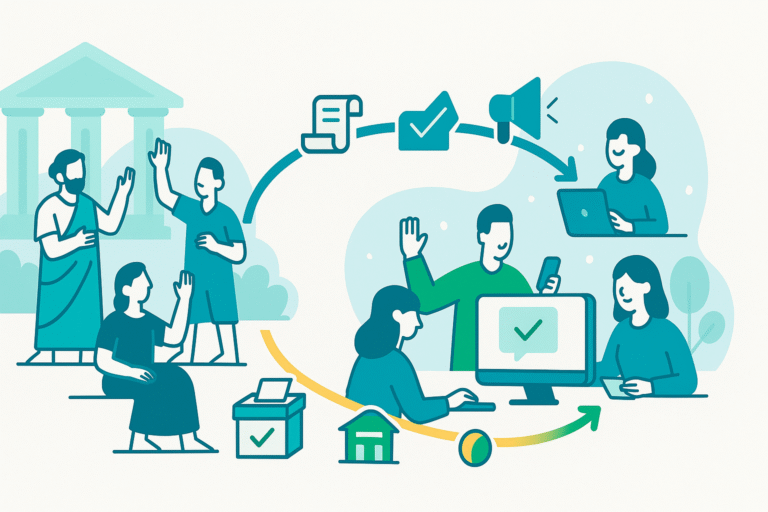
The ladder is well known: inform → consult → collaborate. As the OECD notes, the collaborative level is where civic engagement starts to influence policies and projects. In practice, collaboration requires open spaces to submit ideas, discuss alternatives, and converge toward actionable proposals—then record what was decided and why.
Shared decisions need shared processes
As we explored in Shared decisions: theory and practice of deliberation, the quality of outcomes depends on the quality of the process: listening, argumentation, synthesis, and decision. Digital environments can make each step easier to access and easier to audit, provided they are designed for clarity and fairness.
The essential toolkit of digital participation
Digital participation is not “just a form.” It is a workflow composed of distinct yet connected elements:
- Proposal spaces – to capture ideas, problems, and solutions with attachments and context.
- Deliberation forums – to discuss per paragraph or per topic, preventing noise and enabling evidence-based debate.
- Structured voting – to choose among options (including weighted voting for special cases, e.g., condos).
- Traceable outputs – automatic minutes, changelogs, and public archives for accountability.
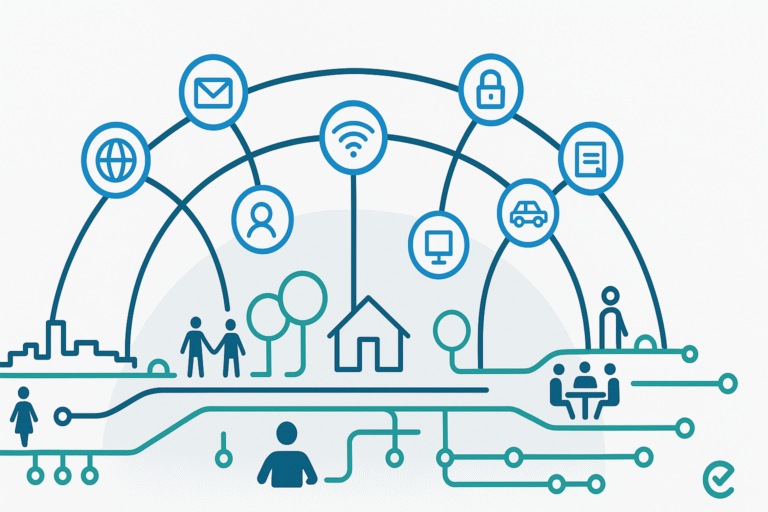
A practical overview of how technology rebuilds trust is covered in Civic innovation: how technology strengthens public trust. Transparency across steps—who participated, what was discussed, how decisions were taken—reduces friction and improves legitimacy.
How a digital participation journey works
Below is a high-level comparison between a traditional approach and a modern, platform-supported approach to participation:
| Phase | Traditional participation | Digital participation (with Concorder) |
|---|---|---|
| Information | Posters, town-hall meetings with limited reach | Web/social updates, shared documents, and real-time timelines |
| Consultation | Paper surveys or small group meetings | Open online surveys, traceable comments, broad inclusion |
| Deliberation | Local discussions with limited documentation | Structured forums, per-paragraph debate, automatic synthesis |
| Decision | Manual vote, paper minutes | Digital vote with audit trail, AI-generated minutes |
What makes participation “real” (and not cosmetic)
Beyond tools, real participation rests on principles:
- Clarity of scope – people need to know what’s in and what’s out: the problem, constraints, criteria, and timeline.
- Equality of voice – balanced facilitation and UX that prevent dominance by a few voices.
- Traceability – every comment, edit, and vote leaves a footprint; changes to texts are visible.
- Feedback loops – a public record showing how inputs influenced outcomes (“you said, we did”).
- Measurable impact – actions, owners, deadlines, and follow-up reporting.
Those principles are also consistent with global guidance such as the GovLab CrowdLaw approach and the European push for participatory, evidence-based policymaking within the European Commission digital transition agenda.
Concorder as a civic platform example
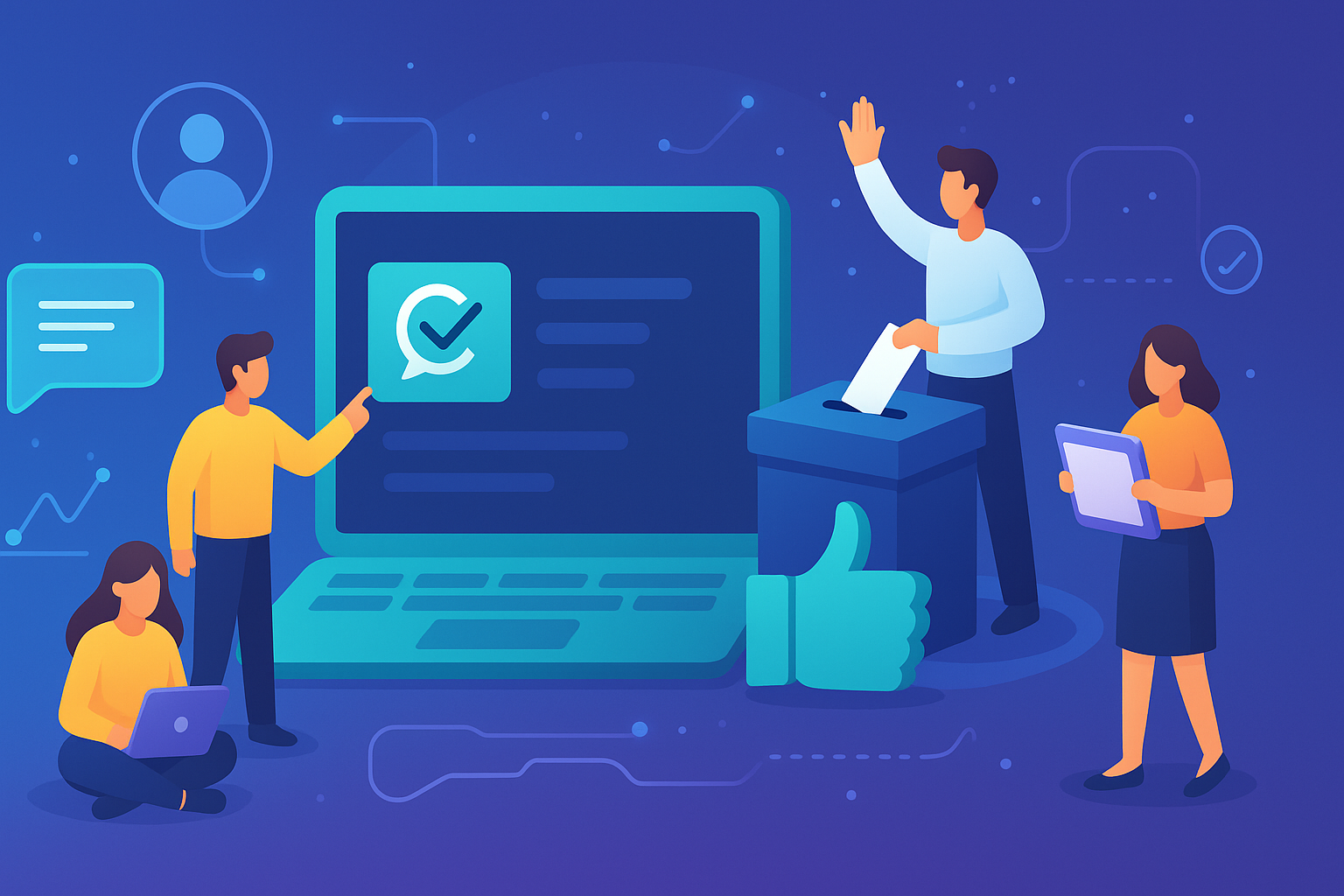
Concorder is designed to turn group input into collective decisions. It structures proposals, keeps debates focused, and handles voting with a clear audit trail. For special cases—like condominiums—Condo Concorder supports weighted votes and generates an AI-powered meeting report including participants, agenda points, outcomes, and follow-up actions. See The “Green Condominium” case for a concrete story of how this reduces conflict while accelerating approvals.
When decisions require a formal record, AI-generated minutes streamline the heavy lifting—summarizing debates, votes, and responsibilities—while remaining fully editable. For a deeper look, read From meetings to automatic minutes: how AI simplifies assemblies.
Design tips for engaging citizens online
Whether you are a city, an NGO, or a project team, these practical tips increase participation quality:
- State the decision pathway up front (what happens after input; how proposals move forward).
- Break complex texts into paragraphs and enable per-paragraph comments to focus the debate.
- Offer alternatives and trade-offs (costs, timelines, impacts) to enable informed choices.
- Set a calendar (submission → discussion → voting → report) and stick to it.
- Close the loop with an open report that maps inputs to outcomes and lists next actions.
These practices—combined with clear governance and ethics—align with international guidance. The UN E-Government reports and EU open government initiatives consistently point to transparency, inclusiveness, and data-driven feedback as drivers of trust.
Traditional vs. digital participation: what changes
Digital approaches introduce gains in scale, speed, and evidence. But the goal remains human-centered: to listen better and decide together. A well-run online process documents contributions, reduces friction, and clarifies why a certain option prevailed—making it easier to move from plan to action.
For background on the cultural, not just technical, shift, see The history of digital democracy. Understanding where we come from improves how we design today’s participation.
Conclusion
Digital participation is not a gadget. It is a disciplined way to include more voices, structure better debates, and produce decisions that people understand and accept. With platforms like Concorder, the entire journey—from proposals to votes to AI-generated minutes—becomes simpler to execute and easier to trust. The result is not only efficiency, but also stronger communities and institutions.
👉 Want to launch a high-quality participation process?
Book a free demo of Concorder or explore the platform now at www.concorder.net.