

Introduction
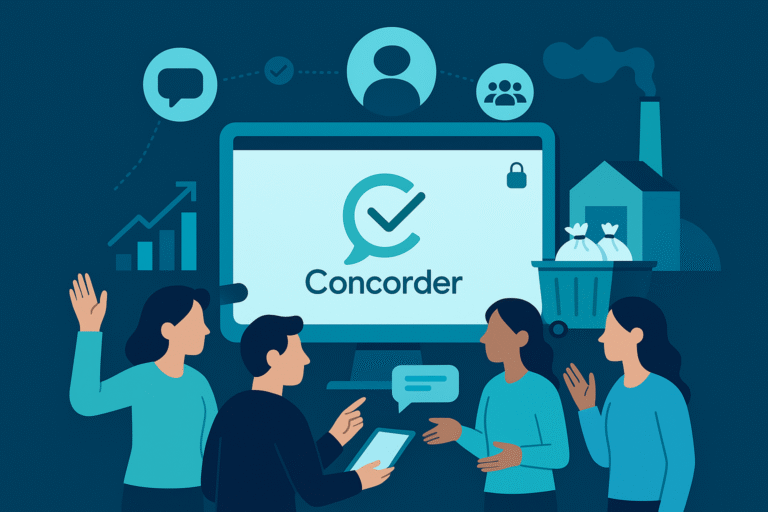
Condominium meetings have a reputation for long debates, low attendance, and recurring disputes. Yet many communities are quietly proving the opposite: with clear information, structured facilitation, and the right digital tools, assemblies can be constructive, transparent, and conflict-free. In this article we present a set of real-world success patterns showing how modern practices—particularly digital participation and AI-assisted documentation—help residents reach shared decisions faster and with greater trust.
Why conflicts arise—and how to defuse them
Typical friction points include poor pre-meeting information, lack of traceability (who attended, who voted, on what), and minutes that don’t reflect the discussion. These issues erode confidence and invite objections. The remedy blends three ingredients:
- Preparation: publish proposals and documents well in advance so people arrive informed.
- Method: structure the discussion by topic and paragraph to avoid overlaps and personal clashes.
- Transparency: record attendance, voting results, and decisions in clear, accessible minutes.
For a deeper view of how structured processes reduce friction, see From meetings to automatic minutes: how AI simplifies assemblies and the case study The “Green Condominium” case: when digital voting brings unity.
From confusion to collaboration: the preparation phase
1) Share the agenda and documents early
Successful boards circulate the agenda, budgets, bids, and technical notes ahead of time. When residents can read, comment, and ask questions before the meeting, they show up focused and less defensive. Platforms like Concorder allow proposals to be drafted collaboratively, keeping feedback tied to each paragraph rather than lost in email threads.
2) Clarify decision rules
Spell out quorum, voting thresholds, and what constitutes approval for each item. Ambiguity is the seed of conflict. A digital voting module makes thresholds explicit and prevents disputes over counts.
3) Make participation easy
Hybrid or virtual attendance matters for busy or elderly residents. Verified access, attendance logging, and recorded sessions help people feel included and informed even if they cannot join onsite.
Three success stories (patterns you can replicate)
Case A — Energy retrofit approved with broad consensus
Context: a mid-size condo needed to decide on façade insulation and boiler replacement. Historically, major works fueled rivalry between stairwells and floors.
What changed: the board published two alternative proposals with full cost breakdowns a week in advance. Residents could comment on each paragraph (scope, timeline, financing) and ask targeted questions. During the meeting, weighted digital voting reflected millesimal shares. The live tally showed the threshold was met; the AI-generated minutes summarized objections and the mitigation plan.
Outcome: 82% approval, zero formal objections, and strong adherence to the execution timeline thanks to clear responsibilities captured in the minutes.
Case B — Chronic quorum issues solved with virtual assembly
Context: a seaside condo struggled to reach quorum because many owners were non-residents.
What changed: a virtual assembly with identity verification, automatic attendance logs, and time-boxed interventions. Residents could vote from home and review the recording.
Outcome: participation rose by 40%; decisions once postponed for months were taken in a single session, with follow-up actions tracked in a shared dashboard.
Case C — Dispute over roof repairs resolved via paragraph-level collaboration
Context: strong disagreement on scope: patch repairs vs. full replacement.
What changed: the board published a shared draft that separated structural, waterproofing, and safety items into distinct paragraphs. Each part was debated and amended in context; the final text clearly listed accepted alternatives and their cost impact.
Outcome: unanimous approval on a staged plan, reducing immediate costs without compromising safety.
Digital practices that prevent conflict
- Paragraph-level comments: keep critiques focused on text, not people.
- Weighted digital voting: accurate, auditable results that match co-ownership shares.
- AI-generated minutes: consistent summaries of participants, agenda items, votes, and assigned actions—ready to share right after the meeting.
- Open decision trail: past proposals, attachments, and outcomes remain accessible for accountability.
For the governance background behind these practices, see Civic innovation: how technology strengthens public trust and the broader perspective offered in The history of digital democracy.
Traditional vs. digital management (at a glance)
| Aspect | Traditional assembly | Digitally supported assembly |
|---|---|---|
| Convocation & access | Paper/email notices; uncertain receipt; physical presence required | Verified access, read receipts, hybrid/virtual attendance |
| Discussion | Unstructured debate; overlapping interventions | Paragraph-level comments; time-boxed interventions; attachments in context |
| Voting | Manual counting; errors and disputes | Weighted digital voting; live thresholds; full audit trail |
| Minutes | Handwritten/word-processed; delays; omissions | AI-generated minutes with participants, results, and assigned actions |
| Transparency | Documents scattered; limited access | Central archive of proposals, votes, and decisions |
Where Concorder fits (without forcing it)
Concorder’s condo-oriented workflow aligns with the patterns above. Before the meeting, proposals are drafted collaboratively; during the session, attendance and weighted votes are recorded; after the session, AI produces the minutes, including the list of participants, discussed items, voting outcomes, and the follow-up actions with responsible persons and due dates. This continuum—from preparation to documentation—reduces ambiguity, speeds up execution, and helps keep the peace.
For related reading, explore Digital participation: how to truly engage citizens, which shows why clarity and traceability encourage constructive behaviour in collective decisions.
Tips for conflict-free assemblies
- Publish all proposals and attachments at least 5–7 days before the meeting.
- Define decision rules (quorum, thresholds) in plain language and show them next to each item.
- Use hybrid access with identity verification and automatic attendance logs.
- Adopt weighted digital voting to match co-ownership shares and avoid counting errors.
- Close with AI-generated minutes and a public action list to maintain momentum and trust.
Conclusion
Conflict-free condominium assemblies are not a utopia. They emerge when preparation, method, and transparency come together—supported by digital participation and reliable documentation. Communities that adopt these practices report higher attendance, faster decisions, and fewer disputes. The key is to make the process fair, understandable, and traceable from start to finish.
👉 Want to run your next assembly with clarity and zero friction?
Book a free demo of Concorder or explore the platform now at www.concorder.net.