
Introduction
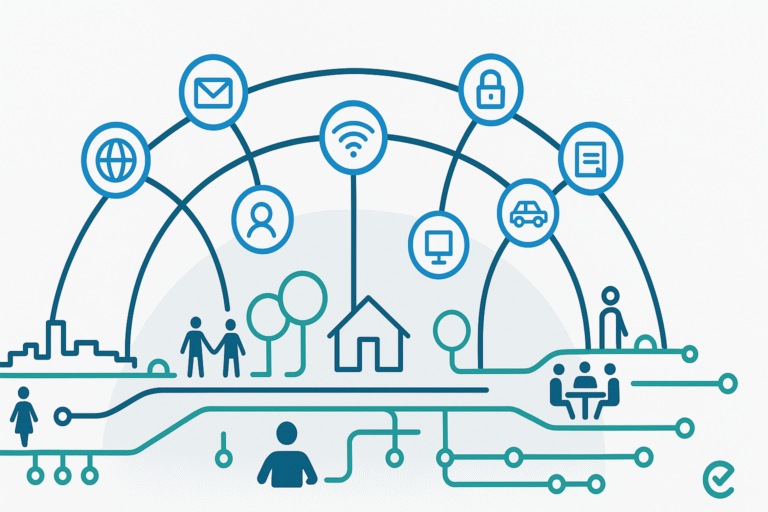
In a fast-changing world, the ability to make shared decisions has become one of the most valuable skills for communities, organizations, and institutions. Deliberation is not just about discussion or voting: it is a conscious process that combines listening, dialogue, and building common solutions. Thanks to platforms like Concorder, this process is now easier, more structured, and fully transparent.
What is deliberation and why it matters
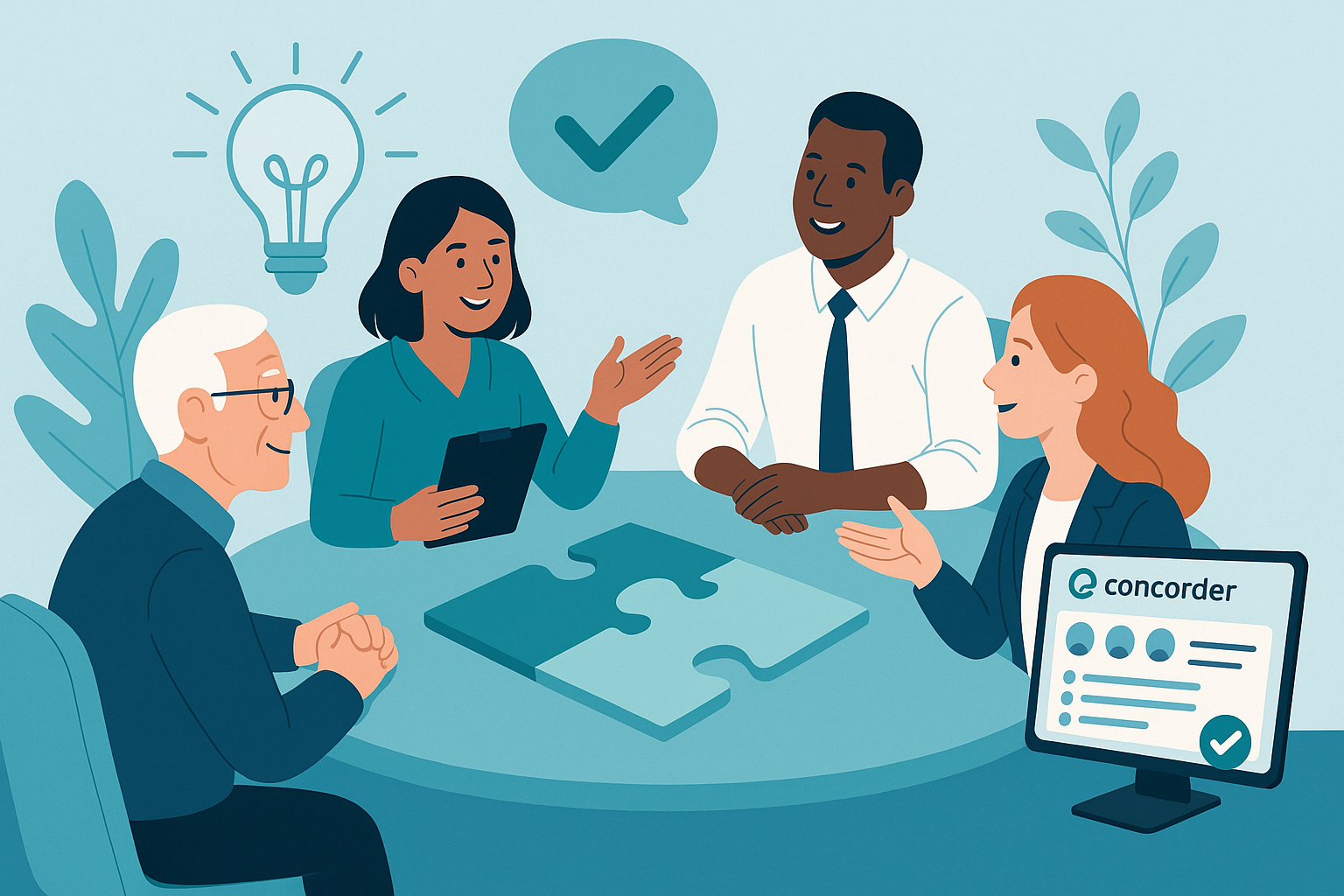
The word “deliberate” comes from the Latin deliberare, meaning “to weigh carefully.” In a deliberative process, participants do not simply express opinions—they reason together to reach a decision based on mutual understanding. This is the essence of participatory democracy, which goes beyond simple voting by putting dialogue and informed consent at the center.
Deliberation takes place in many settings: from city councils to condominium meetings, from corporate teams to online civic communities. As explained in The history of digital democracy: from Greek agoras to online forums, the principle has remained unchanged for millennia—creating spaces where people can reason together about the decisions that shape their lives.
From dialogue to decision: the stages of a deliberative process
An effective deliberative process follows several key stages, each with a clear function. Understanding these phases helps to design meetings that are more organized, inclusive, and results-oriented.
1. Listening and defining the issue
Everything starts with a shared question. Participants must understand the problem and feel involved in its solution. At this stage, proposals, experiences, and points of view are collected to capture the full diversity of perspectives.
2. Discussion and argumentation
This is the phase of open dialogue: participants present their reasons, bringing data, ideas, and alternative views. Here, the facilitator—or the digital platform—ensures balanced participation and mutual respect.
3. Synthesis and collaborative drafting
The debate leads to the creation of a shared document or proposal. This is when common ground emerges and collectively acceptable solutions are defined. As discussed in From meetings to automatic minutes: how AI simplifies assemblies, artificial intelligence can support this step by automatically generating structured and coherent summaries.
4. Decision and implementation
The process ends with the decision itself—whether through consensus, voting, or digital approval. But deliberation does not stop at the vote: it continues in the implementation and follow-up of the agreed actions.
Digital deliberation: how Concorder structures the process
Concorder is designed to simplify and bring clarity to every stage of collective decision-making. Its intuitive interface supports a transparent and traceable workflow, from proposal to final decision.
- Shared proposals – Users can submit ideas, attach documents, and collaboratively edit texts.
- Comments and contributions – Each paragraph can receive targeted comments, keeping discussions focused and productive.
- Structured voting – The system automatically manages votes, including weighted voting (e.g., for condominium assemblies).
- AI-generated minutes – Artificial intelligence produces a complete meeting report, summarizing participants, votes, and approved actions.
This makes Concorder not only a space for discussion but also a real decision-making tool that guarantees transparency, order, and equal participation. The case study The “Green Condominium” case: when digital voting brings unity shows how the platform helped residents deliberate online on complex renovation projects, reducing conflict and simplifying the approval process.
Traditional vs. digital deliberation
| Aspect | Traditional deliberation | Digital deliberation with Concorder |
|---|---|---|
| Meeting invitation | Sent by email or paper, with no tracking | Automatic notifications and digital attendance records |
| Discussion | Unstructured interventions, possible overlaps | Comments organized by paragraph and linked to proposals |
| Decision | Manual voting, difficult to verify | Digital voting with traceable and certified results |
| Transparency | Limited to those physically present | All participants can access the full decision trail |
| Minutes | Manually written, risk of omissions | Automatically generated by AI, editable and archived |
Deliberation in organizations: from meetings to collaborative culture
Deliberative dynamics go beyond public administration. In companies, NGOs, and associations, shared decision-making strengthens cohesion and accountability. As highlighted in Civic innovation: how technology strengthens public trust, transparency builds trust and reduces internal friction.
Within a team, a structured deliberative process helps transform scattered discussions into actionable decisions. Every step is documented, responsibilities are clear, and results are measurable. This not only accelerates approval times but also fosters a stronger sense of belonging.
Toward a culture of conscious participation
Deliberation takes time, but it creates long-term value. It’s about building trust, recognizing differences, and finding common ground. With digital tools like Concorder, this process can now be scaled up to include large communities and complex organizations, without losing the human touch.
Digital participation is no longer an abstract idea—it’s a practical path to improve the quality of decisions, reduce errors, and promote a culture of shared responsibility.
Conclusion
Deliberation is the beating heart of democracy—and of collaboration. Concorder transforms this ancient principle into a modern practice where technology and participation meet to create better decisions. Whether in a condominium, a public institution, or a private company, deciding together means shaping a better future.
👉 Want to experience digital deliberation in action?
Book a free demo of Concorder or explore the platform now at www.concorder.net.